
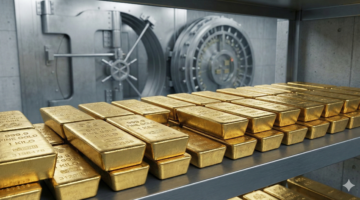
In an era defined by digital currencies, algorithmic trading, and rapidly evolving financial instruments, one asset has remained a constant pillar of the global monetary system: gold. For centuries, this precious metal has served as a store of value, a medium of exchange, and a symbol of economic strength. Today, gold continues to occupy a uniquely strategic position in the portfolios of central banks, the reserves of sovereign nations, and the long-term investment strategies of institutions worldwide.
Understanding gold's role in the modern economy is not merely an academic exercise — it is essential context for anyone seeking to understand the forces that shape global financial stability.
The Historical Foundation: Gold and the Monetary System
Gold's relationship with formal monetary systems dates back thousands of years, but its most defining modern chapter began in the 19th century with the establishment of the Gold Standard — a system under which currencies were directly pegged to a fixed quantity of gold. This framework provided exchange rate stability and disciplined government spending, underpinning the rapid economic expansion of the industrialized world.
The Bretton Woods Agreement of 1944 placed gold at the center of the post-war international monetary order, fixing the US dollar to gold at $35 per ounce and allowing other currencies to be pegged to the dollar. This system governed global finance for nearly three decades until President Nixon suspended dollar-gold convertibility in 1971 — an event known as the "Nixon Shock" — effectively ending the Gold Standard era.
Yet despite the formal decoupling of currencies from gold, the metal never lost its fundamental relevance. If anything, its role evolved — from a rigid monetary anchor to a flexible, universally trusted reserve asset.
Central Banks and Gold Reserves: A Strategic Imperative
Central banks are the world's largest institutional holders of gold, collectively holding over 35,000 tonnes — approximately one-fifth of all the gold ever mined. This is not a legacy position maintained out of tradition. It is a deliberate, actively managed strategic allocation driven by clear financial and geopolitical rationale.
Why do central banks hold gold?
Diversification and risk management. Gold has a low or negative correlation with most financial assets, including equities and bonds. In a portfolio context, this makes gold an effective hedge against systemic risk — when other assets decline, gold frequently holds or increases its value.
Protection against currency debasement. In periods of expansionary monetary policy — such as the quantitative easing programs implemented following the 2008 financial crisis and again during the COVID-19 pandemic — central banks that print large quantities of currency risk eroding its purchasing power. Gold, which cannot be printed or manufactured at will, serves as a natural counterweight to this risk.
Geopolitical independence. Gold held in physical form within a nation's own vaults is an asset that cannot be frozen, sanctioned, or defaulted upon by a foreign government. In an increasingly multipolar world, this characteristic has made gold reserves a key element of national financial sovereignty.
Market confidence. A nation's gold reserves signal financial credibility to international markets and trading partners. Substantial reserves reinforce confidence in a country's monetary stability and its ability to meet external obligations.
The Central Bank Gold Buying Trend
In recent years, central bank demand for gold has reached levels not seen since the collapse of the Bretton Woods system. According to World Gold Council data, central banks have been net buyers of gold consistently, with annual purchases frequently exceeding 1,000 tonnes. Emerging market central banks — including those of China, India, Turkey, Poland, and several Gulf states — have been particularly active, seeking to reduce their dependence on the US dollar and diversify their reserve portfolios.
This structural shift in central bank behavior has had a meaningful impact on global gold demand, providing a significant and relatively price-inelastic source of buying that underpins the market even during periods of reduced consumer or investor demand.
Gold as a Safe Haven Asset
Beyond central bank reserves, gold plays a critical role as a safe haven asset in times of economic and geopolitical uncertainty. When financial markets experience acute stress — whether triggered by a banking crisis, geopolitical conflict, inflationary surge, or pandemic — investors and institutions instinctively turn to gold as a reliable store of value.
This behavior is not irrational sentiment. It is grounded in gold's unique combination of characteristics: it is scarce, durable, universally recognized, liquid in global markets, and free from counterparty risk. Unlike a bond or a bank deposit, physical gold does not depend on any issuer's ability or willingness to honor an obligation. It simply exists — and retains value.
This safe haven dynamic has been demonstrated repeatedly throughout history. During the 2008 global financial crisis, gold prices rose significantly while equity markets collapsed. During the COVID-19 pandemic, gold reached record highs as uncertainty peaked. And during periods of elevated geopolitical tension, gold has consistently outperformed most other asset classes.
Gold's Influence on Currency Markets
Although currencies are no longer formally pegged to gold, the metal continues to exert meaningful influence on foreign exchange markets. The US dollar and gold have historically maintained an inverse relationship: when the dollar weakens, gold tends to rise in price, and vice versa. This dynamic reflects gold's role as an alternative store of value to the dollar, the world's primary reserve currency.
For countries that are significant gold producers, the metal also plays a direct role in trade balances and currency stability. Gold exports generate foreign currency inflows that can support a nation's exchange rate and buffer against external shocks — a particularly important consideration for emerging market economies.
The Intersection of Mining and Macroeconomics
The gold mining industry does not operate in isolation from these macroeconomic forces — it is directly shaped by them. Gold prices, which drive the economics of mining projects worldwide, are themselves a function of central bank policy, currency dynamics, inflation expectations, and investor sentiment.
When real interest rates are low or negative — as they have been for much of the past decade — the opportunity cost of holding gold diminishes, and prices tend to rise. This creates a more favorable environment for mining investment and expansion. Conversely, rising interest rates can put downward pressure on gold prices, squeezing margins and requiring mining companies to operate with greater efficiency and discipline.
Understanding this macroeconomic context is essential for any company operating in the gold mining and trading space. It informs decisions around project development, hedging strategy, capital allocation, and market timing — all of which ultimately determine whether a mining operation creates sustainable long-term value.
Looking Ahead: Gold in the Future Global Economy
The long-term outlook for gold in the global economy remains compelling. Several structural trends suggest that demand for gold — both from central banks and private investors — will remain robust in the years ahead.
The continued diversification of global reserve portfolios away from a single dominant currency, the growing use of gold in high-technology applications, the increasing institutionalization of gold investment through ETFs and other vehicles, and the fundamental scarcity of new gold discoveries all point toward sustained relevance for the metal in the decades to come.
At the same time, the industry that produces gold will face growing expectations around environmental stewardship, supply chain transparency, and social responsibility. Meeting these expectations is not a constraint on growth — it is a prerequisite for it.